
The Midnight Panic of the Overstretched Founder
Imagine this scenario for a moment. Your new business just got its first taste of real attention. Maybe a popular blog mentioned your product, or a small group of early users started praising you online.
Suddenly, your inbox is buzzing. Investors are calling, asking about your big expansion plans. The pressure to "go big or go home" hits you like a freight train. You feel this intense, overwhelming urge to hire twenty new people, rent a beautiful downtown office, and pour thousands of dollars into Facebook ads.
So, you pull the trigger. You scale up. But within a few short months, the excitement turns into a living nightmare.
Your new sales team is confused because the product still has massive bugs. Customers are sending angry emails because your support team cannot handle the volume. Worst of all, your bank account is draining faster than you ever thought possible.
You find yourself staring at your bedroom ceiling at 3 AM, completely paralyzed by anxiety. You built a team of fifty people, but you have no idea how you will make payroll next month. The dream of running a successful company has turned into a daily struggle just to survive.
This is the silent trap of expanding before you are truly ready. It destroys mental peace, ruins perfectly good product ideas, and leaves founders feeling like complete failures. But the truth is, you did not fail because your idea was bad. You stumbled because you tried to build a skyscraper on a foundation made of loose sand.
Let us break down exactly what happens behind closed doors when a company grows too fast, and how you can spot the warning signs before it is too late.
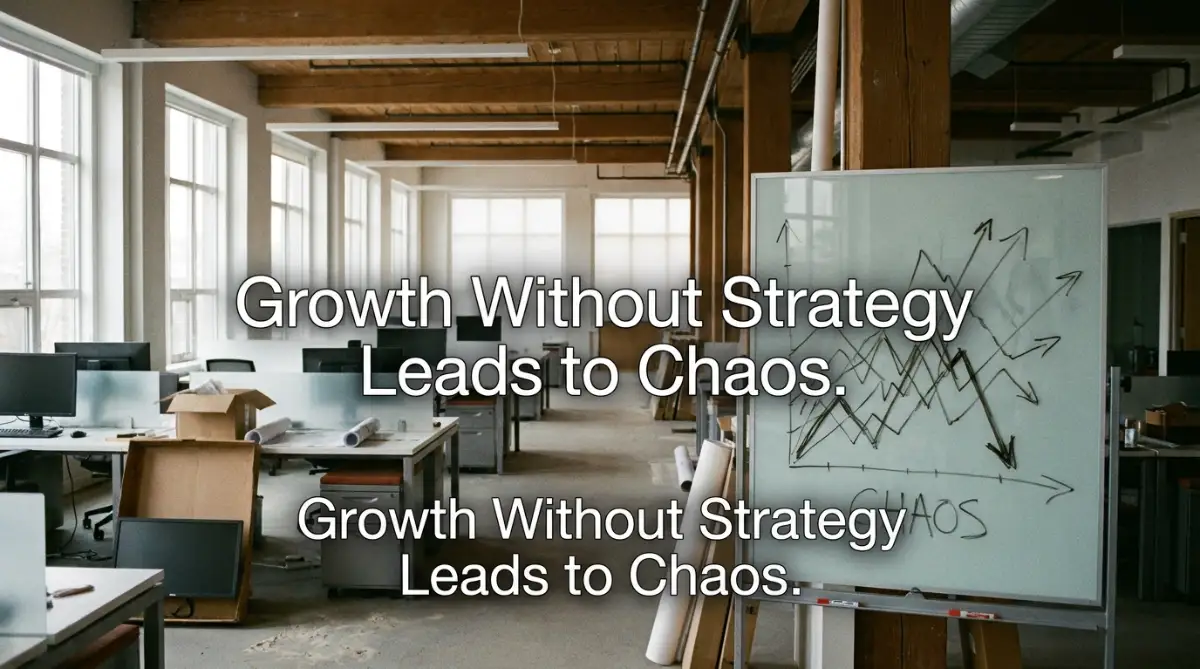
Diagnosing the Cracks in Your Business Foundation
When we talk about a "solid base," we are not talking about having a nice logo or a catchy company name. A solid base means you have a product that people actually want to buy, and a system that can deliver it perfectly every single time.
If you try to multiply your operations before fixing the small issues, you only multiply your problems. Here is a deep look into the structural failures that happen when you push the gas pedal too early.
The Danger of Ignoring Product-Market Fit
The biggest trap new founders fall into is assuming that early sales mean guaranteed long-term success. Just because your friends, family, and a hundred early adopters bought your software does not mean the general public will.
Product-market fit means your target customers are actively buying, using, and telling others about your product. If you scale marketing before achieving this, you are literally paying money to show people a product they do not want.
Real-Life Scenario: Think about a new meal delivery app. The founder decides to spend $50,000 on Google Ads to get 5,000 new sign-ups. However, the app crashes when too many people order at once, and the food arrives cold. Those 5,000 people will delete the app and leave a one-star review.
Because the founder scaled before fixing the delivery logistics, they permanently ruined their reputation with 5,000 potential buyers. You can never get a second chance to make a first impression.
💡 Myth vs. Reality: The Growth Illusion
- The Myth: If we grow our team and spend more on marketing, our revenue will automatically catch up.
- The Reality: Throwing money at a broken system just burns cash faster. Revenue only grows when the core customer experience is flawless.
- The Myth: We have to capture the market right now, or a competitor will steal our idea.
- The Reality: Execution always beats speed. A competitor with a slow, stable, and highly functional product will easily steal customers away from a fast, chaotic, and broken startup.
The "Leaky Bucket" Customer Trap
One of the most obvious signs that a company scaled prematurely is a massive churn rate. Churn rate is simply the percentage of customers who stop using your product over a given period.
Imagine you are trying to fill a bucket with water. You have a huge hose (your marketing and sales team) pouring water in. But the bucket has ten massive holes in the bottom (poor customer service, bugs, bad user experience).
No matter how much water you pour in, the bucket will never stay full. Many founders ignore the holes and just buy a bigger hose. This is a very expensive mistake.
Before you spend another dollar on acquiring new users, you must fix the holes. If your current customers are not staying with you for at least six months, you are not ready to scale. You need to call those leaving customers directly and ask them exactly why they are walking away.
When Culture Turns Toxic Overnight
When it is just you and three co-founders in a small room, communication is easy. Everyone knows the mission, and everyone works late to get things done. You share a very tight, unified company culture.
Now, imagine hiring thirty new people in a single month. You do not have an onboarding manual. You do not have a human resources department. You simply throw these new employees at a desk and tell them to start working.
What happens next is pure chaos.
The new hires do not know the company values. They start making up their own rules. Different departments stop talking to each other. Suddenly, the friendly, creative environment you loved turns into a stressful, political office filled with confusion.
Pro Care Tip for Founders: Never hire a manager until you have personally done the job yourself first. If you do not know exactly what a successful customer support call sounds like, you cannot properly train or manage a support team. Build the documented process first, then hire the person to follow it.
The Unit Economics Disconnect
This is where many ambitious businesses meet their end. Unit economics is a simple mathematical concept: how much does it cost to get one customer, and how much money will that customer give you over time?
Let us say it costs you $100 in advertising to get a new buyer. That buyer only spends $40 on your website and never comes back. You are losing $60 on every single transaction.
If you are a small company doing this ten times a week, you lose $600. It hurts, but you can survive it. But what happens if you scale?
If you suddenly push your marketing to get 10,000 customers a week with those exact same broken economics, you will lose $600,000. Scaling a negative number just leads to bankruptcy at lightning speed. You must figure out how to make a solid profit on a single user before you try to get a million of them.
A Quick Health Check for Your Startup
To help you visualize where you currently stand, look at this simple comparison. This will show you the exact difference between a healthy foundation and a dangerous, premature expansion.
The Collapse of Customer Support
When you increase your user base by 500% in a few weeks, your support tickets will also increase by 500%. If your support team is not ready, the delay in response times will destroy your brand trust.
In the early days, you probably answered every customer email yourself within ten minutes. Your buyers loved that personal touch. But when you scale too fast, those ten-minute response times turn into five-day waiting periods.
Customers hate feeling ignored. When they do not get an answer from your support email, they will take their anger to public platforms. They will leave angry comments on your Facebook ads and write terrible reviews on Google.
You cannot scale your sales without scaling your support systems at the exact same time. This requires implementing smart help desk software, building a massive self-service FAQ section, and training dedicated agents who deeply understand your product.
Losing Focus on the Core Vision
When a business expands rapidly without a strong base, the leadership team gets distracted by shiny objects. Instead of making their main product better, they start launching three new products at the same time.
They open offices in new cities before securing their home market. They start hosting expensive events and chasing after massive enterprise clients when their software is only built for small businesses.
This lack of focus drains energy from the core product that actually pays the bills. The main software starts getting buggy because all the developers are working on a new side project. Focus is your greatest weapon.
Do not try to be everything to everyone. Find one specific problem, solve it better than anyone else in the world, and dominate that single niche before you ever think about moving on to the next big thing.
Mastering the Art of Controlled Expansion
We all dream of watching our small ideas turn into massive, successful companies. But keeping that momentum alive requires an incredible amount of discipline and patience. You cannot simply throw money at a business and expect it to run smoothly on its own.
To maintain healthy, long-term growth, you must shift your focus from outside marketing to inside operations. This means looking deeply at how your team functions daily. A business is only as strong as the systems holding it together.
Here are the smartest ways to prepare your startup for safe, sustainable expansion without losing your mind in the process.
Lock Down Your Internal Systems First
You cannot fly an airplane while you are still building the engine. When a small company suddenly gets thousands of new users, their basic software tools usually crash under the heavy weight. You might be using free software or cheap hosting to save money right now.
However, relying on weak technology during a growth phase is a recipe for disaster. When your website goes down, your customers will immediately lose trust in your brand. You must audit your entire tech stack before you invite more people to use it.
This includes understanding how open-source security flaws can accidentally expose your users' private data if you are not paying close attention. Upgrading your internal security and server capacity is not an option; it is an absolute necessity.
The "Hire Slow, Fire Fast" Philosophy
When revenue spikes, founders often rush to hire anyone who has a decent resume. They think that simply adding warm bodies to the office will solve their workload problems. This is a very dangerous assumption.
Hiring the wrong person during a sensitive growth phase can completely destroy your company culture. Imagine bringing in a highly aggressive sales manager who cares only about their commission. They might bully your existing staff and ruin the friendly environment you worked so hard to build.
Take your time when interviewing new candidates. Ask them difficult scenario-based questions to see how they handle stress. If someone turns out to be toxic after you hire them, let them go immediately before their negative attitude spreads to the rest of the team.
Build a Documented Brain Trust
Ask yourself a very scary question right now. If you were completely disconnected from the internet for a month, would your business survive? For most new founders, the answer is a solid no.
This happens because all the important knowledge is locked inside the founder's head. You know exactly how to handle angry customers, how to process refunds, and how to fix broken product features. But your team does not.
You need to write down every single process. Create simple, step-by-step guides for every task in your company. Interestingly, data from the Stanford Graduate School of Business research on organizational scaling highlights that companies with documented daily processes survive their initial growth phases at significantly higher rates.
Focus Deeply on Customer Retention
Most startups obsess over acquiring brand new users. They spend their entire budget on flashy social media ads just to get fresh clicks. However, they completely ignore the loyal buyers who have supported them from day one.
It is incredibly expensive to convince a stranger to trust you. It is much easier to sell a new feature to someone who already loves your brand. You should spend just as much time and energy keeping your old users happy.
Call your best customers directly and ask them how you can improve. Send them surprise gifts or give them early access to your new updates. When your existing users feel deeply valued, they will naturally advertise your product to their friends for free.

The Heartbreaking Traps of Unchecked Ambition
Growing a business brings out strong emotions. The sudden rush of early success can easily inflate a founder's ego, making them feel invincible. This false sense of security leads to terrible, blind decisions.
When you scale prematurely, you stop listening to logic and start acting out of pure greed or fear. Many smart entrepreneurs have lost everything simply because they refused to recognize these silent warning signs.
Let us walk through the most destructive mistakes founders make when they push the gas pedal too hard, and how you can avoid these painful traps.
Rushing Into Dangerous Legal Agreements
When your company is in the spotlight, other businesses will suddenly want to partner with you. You will receive exciting offers from massive vendors, suppliers, and potential investors. The pressure to sign these deals quickly is incredibly intense.
Founders often glance at a contract, see a big financial number, and sign their name without thinking twice. They do not realize they just gave away massive control of their company. This is exactly why signing a business contract alone is a dangerous trap when you are desperate to keep growing.
Never let excitement replace basic common sense. Always hire a professional business attorney to read every single line of a new partnership agreement. A bad contract can quietly drain your profits and legally lock you out of your own decisions.
The Illusion of Vanity Metrics
We all love looking at numbers that go up. A massive increase in your website traffic or social media followers feels like a huge victory. We proudly share these numbers in meetings to prove that our strategy is working.
But these are just "vanity metrics." A million Instagram followers mean absolutely nothing if none of them actually open their wallets to buy your product. If you base your expansion plans on these empty numbers, you will run out of cash immediately.
Instead, focus entirely on your active engagement and daily profit margins. Ask yourself how many people logged into your software today and actually used it. Real revenue is the only metric that guarantees your survival in the market.
💡 The Reality Check Q&A for Ambitious Founders
To help you stay grounded, let us address some common internal conflicts founders face during a growth phase.
- Question: Should I expand my services to a new city if my current home market is highly profitable?
- Answer: Do not rush this step. According to the U.S. Small Business Administration guidelines on business expansion, moving into new geographic areas too quickly is a leading cause of sudden cash flow crises. Dominate your local area completely until you have a massive financial safety net.
- Question: What if a new competitor copies my main features and starts stealing attention?
- Answer: Let them copy the features. A copycat can steal your button design, but they can never steal your amazing customer service or your brand loyalty. Focus on your own buyers, not the competition.
The Unseen Dangers in Your Foundation
Scaling your business operations exposes every single weakness you previously ignored. When you only have ten clients, a slightly delayed email response is not a big deal. When you have ten thousand clients, that same delay turns into a massive public relations disaster.
Think of this process like buying a large commercial building. Just like the hidden structural issues to look for during a property inspection, the cracks in your business model might not be visible until you put heavy weight on them.
You must actively stress-test your own company. Push your support tickets, test your server limits, and closely watch how your team reacts under heavy pressure. Fix the small leaks now before they flood your entire office.
Ignoring Severe Employee Burnout
In the early startup days, working long weekend hours feels exciting. The original founding team bonds over late-night pizza and solving complex problems together. But you cannot expect human beings to run at maximum speed forever.
When a startup scales aggressively, the workload often doubles overnight. If you do not hire enough help or force your team to rest, they will eventually break down emotionally and physically.
Burnout destroys creativity and leads to massive employee turnover. You will start losing your smartest, most dedicated workers because they simply cannot handle the exhaustion anymore. You must force your leaders to take real vacations and respect their personal boundaries.
Your Action Plan for Safe and Profitable Growth
Building a company from the ground up is one of the hardest things a person can do. You have already shown incredible courage just by getting this far. Now, your job is to protect what you have built with smart, calculated decisions.
You do not have to conquer the entire world by next month. Real, lasting business success is a marathon, not a quick sprint. By taking a step back to strengthen your foundation, you are actually guaranteeing a much bigger victory in the future.
To help you stay on track, I want you to step away from the big picture for just a moment. Try focusing on these small, actionable steps starting tomorrow morning.
Your Immediate Next Steps
- Audit Your Customer Happiness: Spend one hour reading the support emails your team received this week. Look for any repeating complaints and fix that exact issue before the weekend.
- Document One Manual Process: Pick one difficult task that only you know how to do. Write down a simple five-step guide on how to complete it, and hand it to a trusted team member.
- Review Your True Profit Margins: Stop looking at your total user count. Calculate exactly how much profit you make on a single sale after all marketing and software costs are deducted.
Take a deep breath and trust your journey. You have the vision and the drive to make this work. Focus on delivering extreme value to the users you already have, keep your internal systems tight, and let your growth happen naturally. You are going to build something amazing.
Business Disclaimer: The information provided in this blog post is intended for general educational purposes only. It does not constitute formal legal, financial, or professional business advice. Every startup is unique, and market conditions change frequently. Always consult with a certified financial advisor or legal professional before making major expansion, investment, or partnership decisions.