
The Costly Illusion of the "Move-In Ready" Dream Home
Let me share a very common and heartbreaking scenario that happens in the real estate market every single day. You walk through the front door of a beautifully staged open house. The walls wear a fresh coat of bright white paint, the hardwood floors are shining, and the kitchen features brand-new granite countertops.
You immediately fall in love. You imagine your family sitting around the fireplace and your kids playing in the backyard. The house smells like fresh vanilla cookies, and everything seems absolutely perfect on the surface.
You put in a competitive offer, the seller accepts, and you get the keys. But six months later, the honeymoon phase ends abruptly. You notice that the front door suddenly sticks and refuses to close properly.
A few weeks after that, a strange, jagged crack appears diagonally across your freshly painted living room wall. You call a contractor, hoping it is just a minor cosmetic fix. Instead, you receive a repair estimate for $40,000 to fix a failing foundation that is slowly sinking into the earth.
The mental exhaustion that follows is completely overwhelming. Your dream home suddenly feels like a financial prison. You lose sleep wondering how you will afford massive construction loans on top of your new mortgage.
This nightmare happens because we are biologically wired to focus on pretty, shiny things. Sellers know this, so they spend their money hiding massive structural defects behind cheap drywall and fresh paint. Today, I am going to teach you how to see past the beautiful staging and read the true physical health of any building.
Reading the House Like a Book: Where the Real Secrets Hide
To protect your bank account, you have to stop looking at the cosmetic features of a house. Anyone can install a beautiful new sink or lay down a trendy rug. You need to focus entirely on the bones of the building.
When you evaluate a property, you should think of it as a living organism. If the skeleton is broken, it does not matter how good the skin looks.
You do not need an engineering degree to spot these major red flags. You simply need to know exactly where to look and what specific patterns mean. Let us break down the most expensive structural failures and how they disguise themselves.
The Ground Beneath: Decoding Foundation Cracks
The foundation is the absolute most important part of any structure. If it fails, the entire house goes down with it. However, not all cracks mean the house is falling apart.
Concrete naturally shrinks as it cures over time. This creates tiny, thin vertical cracks that look like little spider webs. These are usually harmless and happen in almost every modern home.
The real danger comes from horizontal lines. If you see a deep crack running sideways along a concrete basement wall, you should walk away immediately. This indicates that the soil outside the house is swelling with water and physically pushing the wall inward.
Hydrostatic pressure is incredibly powerful. Over time, that sideways pressure will cause the entire concrete wall to bow inward and eventually collapse under the weight of the dirt.
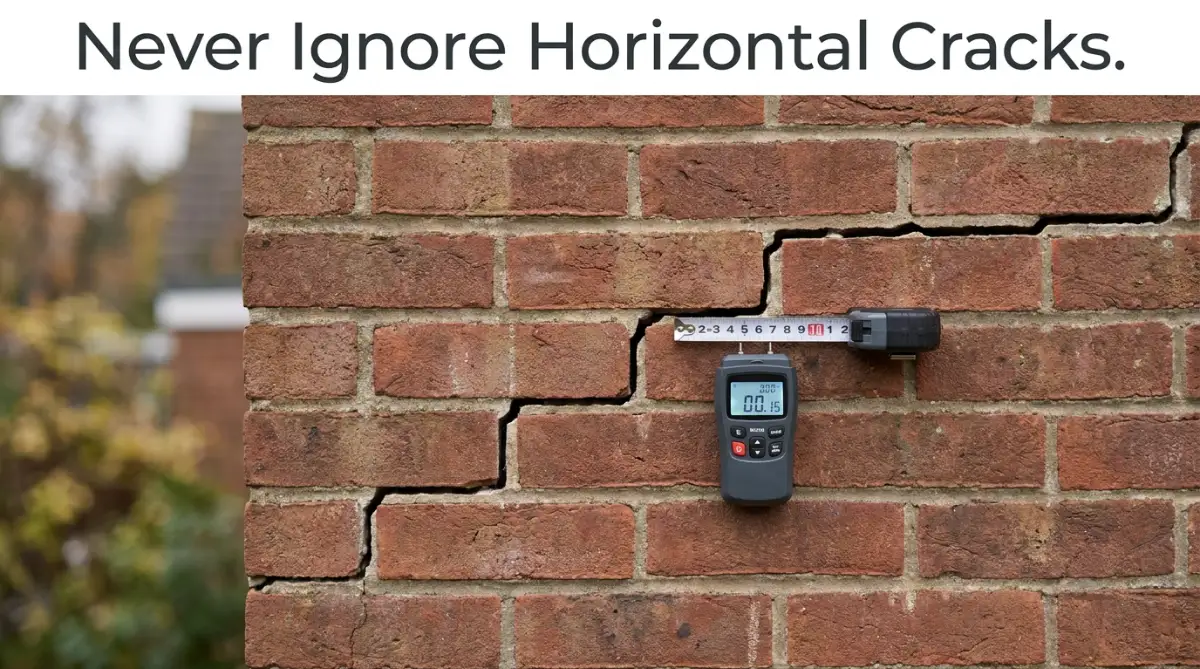
Pro Tip for Brick Homes: If the house has a brick exterior, look very closely at the mortar between the bricks. If you see a crack that looks like a set of stairs moving up the wall, the foundation is actively sinking into the ground on one side.
The Illusion of the "Open Concept" Remodel
Open-concept living spaces are incredibly popular right now. Everyone wants a massive, flowing room that connects the kitchen directly to the living area. To achieve this, real estate investors often knock down interior walls.
This is where things get incredibly dangerous. Many interior walls are "load-bearing," meaning they physically hold up the weight of the roof and the second floor.
When a cheap flipper removes a load-bearing wall, they are supposed to install a massive, expensive steel or wooden beam to replace the support. Very often, they skip this step to save money.
They simply patch the ceiling with drywall and sell the house quickly before gravity takes over. Without proper support, the upper floor will eventually begin to sag in the middle like a heavy hammock.
When you walk through a newly remodeled open-concept home, look directly up at the ceiling where the old wall used to be. If you see a slight dip, a long crack, or a wave in the ceiling texture, the structural integrity of the roof is severely compromised.
Myth vs Reality: The Bouncy Floor Test
The Myth: "Old houses naturally have squeaky, bouncy floors because the wood is just aging and settling."
The Reality: Wood does not turn into a trampoline just because it gets old. If you walk across the middle of a room and the floor dips or bounces significantly under your weight, there is a major structural problem happening beneath your feet.
This bounce usually means the wooden joists holding up the floor have been compromised. They might be weakened by long-term termite damage, or a careless plumber might have cut huge holes through them to run new pipes.
If you feel a noticeable bounce, place a simple round marble on the floor. If it immediately rolls toward the center of the room at a high speed, the floor joists are actively failing and need immediate replacement.
The Roof and Attic Deceptions
The attic is the single most honest room in any house. Sellers rarely spend money making the attic look pretty, which means all the structural secrets are usually hiding in plain sight up there.
When a roof begins to fail structurally, you will often see it from the outside first. Stand across the street from the house and look at the main roofline against the sky.
The ridge of the roof should be perfectly straight. If it looks like a horse’s saddle with a dip in the middle, the internal wooden rafters have snapped or warped. Fixing a sagging roofline requires tearing off the entire roof and rebuilding the wooden frame, which can easily cost tens of thousands of dollars.
Unseen Moisture: The Silent Wood Killer
Water is the ultimate enemy of a wooden structure. A slow, hidden water leak can destroy the structural framing of a house much faster than a fire.
The problem is that sellers often paint over water stains on the ceiling to hide a leaking roof or a broken upstairs shower. But water always leaves a chemical signature behind.
Expert Insight on Hidden Moisture:
Bring a strong LED flashlight and turn off the lights in the room. Shine the flashlight flat against the ceiling. Fresh paint will reflect the light evenly, but an area that has been patched or painted over to hide water damage will look slightly raised, wavy, or discolored under harsh light.
You should also check the areas around the exterior doors and the bottom of the windows. Press your thumb firmly against the wooden trim.
If the wood feels soft, spongy, or crumbles under your thumb, you have found dry rot. Dry rot is a specific type of fungus that eats the strength completely out of structural wood, leaving it brittle and useless.
Comparing Normal Wear to Structural Disasters
To keep things simple, you need to separate normal aging from actual danger. Here is a quick reference guide to help you categorize what you see during a walkthrough.
The Unseen Threat of Wood-Destroying Insects
We cannot talk about structural damage without mentioning pests. Termites, carpenter ants, and powderpost beetles do not care about your fresh paint job. They care about eating the wooden skeleton of the house.
The terrifying thing about termites is that they eat wood from the inside out. They intentionally leave the outer layer of the wood completely intact to protect themselves from sunlight and predators.
A wooden support beam in the basement might look perfectly healthy to the naked eye. But if you tap on it with the handle of a screwdriver, it will sound completely hollow, like an empty cardboard box.
You might also notice tiny piles of what looks like sawdust near the baseboards. This is actually frass, which is the waste left behind by insects eating your walls.
If you see these small piles, or if you spot tiny mud tubes running up the concrete foundation on the outside of the house, the structural wood is under active attack. Fixing this requires massive chemical treatments and replacing the eaten support beams.
Pro-Level Walkthrough: Tools and Tactics for the Smart Buyer
Now that you know what to look for, you need to upgrade how you actually walk through a property. Most buyers simply wander from room to room, looking at the size of the closets and the color of the cabinets.
If you want to protect your life savings, you have to act like a detective. You do not need to be a licensed contractor, but you do need a few simple tools and a sharp strategy.
We are going to move beyond the basic visual check. Let us look at the exact methods professionals use to uncover expensive secrets hidden behind the drywall.
Bring the Right Technology to the Tour
You should never go to a home inspection empty-handed. Your smartphone has a great flashlight, but you need something much stronger.
Buy a high-lumen, tactical LED flashlight before you start touring houses. A bright beam of light cast sideways across a ceiling or wall will instantly reveal bad drywall patches and hidden water damage.
Next, consider buying a cheap digital moisture meter from your local hardware store. These small devices have two metal pins on the top.
If you see a suspicious brown stain near a window frame or on a basement baseboard, you simply press the pins against the wood. The meter will immediately tell you if the wood is currently wet inside.
If you want to understand the health risks associated with wet wood, the Environmental Protection Agency offers a fantastic resource on identifying indoor moisture and hidden mold growth. A high moisture reading means an active leak is slowly rotting the home from the inside out.
The "Walk Around" Grading Secret
One of the biggest causes of structural failure actually starts outside the house. Before you even walk through the front door, take a slow walk around the entire perimeter of the building.
Look closely at the dirt and landscaping sitting right next to the foundation walls. The ground should always slope away from the house.
If the dirt slopes toward the house, every single drop of rain will flow directly against the concrete foundation. This creates massive hydrostatic pressure, pushing the walls inward over time.
You should also look directly at the gutter downspouts. A downspout should carry rainwater at least five to six feet away from the foundation. If the downspout dumps water directly at the base of the house, you can guarantee there is water damage hiding in the basement.
Follow the Trail of Unpermitted Work
When a homeowner decides to remodel their kitchen or finish their basement, they are supposed to pull a permit from the local city government. This ensures a city inspector checks the framing, electrical, and plumbing to make sure it is safe.
Many homeowners skip this step because they want to save a few hundred dollars. They hire cheap, unlicensed handymen who cut through load-bearing walls without installing proper support beams.
If the seller advertises a "newly finished basement" or an "open-concept kitchen," ask your real estate agent to check the city permit history. If there are no permits on file, you are walking into a massive structural liability.
If the city finds out about unpermitted structural changes later, they will force you to tear the walls down at your own expense. This unexpected financial blow is exactly why paying the minimum credit card balance is a dangerous trap. Both situations trap you in a cycle of endless debt because you ignored the mathematical reality of the problem.
The Thermal Imaging Advantage
If you are serious about buying a specific home, ask your inspector if they use a thermal imaging camera. This is a game-changer for spotting hidden structural flaws.
A thermal camera reads heat signatures inside the walls. It can easily spot a cold, wet spot caused by a hidden plumbing leak behind the shower.
It also reveals missing insulation. If a structural wall is missing insulation, condensation will build up inside the wall cavity during the winter months, leading to severe wood rot.
To see how experts interpret these temperature readings, you can read more about additional FAQs about Home Inspection from the American Society of Home Inspectors. Relying on advanced tools removes the guesswork and gives you hard, scientific data.

The Costly Illusions: How Buyers Sabotage Their Own Investments
Even when buyers have all the right information, human emotion often gets in the way. Buying a home is an incredibly stressful and highly emotional process.
When you finally find a house in a great school district, your brain starts making excuses for the red flags. You start telling yourself that a sagging floor or a cracked wall is just "character."
Ignoring these warning signs out of desperation will financially ruin you. We need to discuss the massive psychological traps that buyers fall into during a hot real estate market. Do not let the fear of missing out blind you to structural reality.
The Bidding War Trap (Waiving Your Rights)
In a highly competitive market, real estate agents sometimes give terrible advice. To make your offer look more attractive to the seller, an agent might suggest waiving your right to a home inspection.
This is the absolute worst financial decision you can make. When you waive the inspection, you are buying the property completely blind.
If you move in and discover the roof framing is snapped in half, the seller is no longer responsible. You cannot sue them, and your insurance company will not pay for pre-existing damage.
You just bought a massive liability. The pressure to win a bidding war often forces smart people to ignore their own common sense.
The Illusion of the "Seller Credit"
Let us say your inspector actually finds a major structural issue. The basement wall is bowing inward, and the repair will cost $30,000.
The seller panics and offers you a $10,000 credit at closing to make the deal go through. They tell you that you can use this money to fix the wall later.
Many buyers accept this deal because they want the extra cash in their pocket. This is a massive mistake.
Structural repairs almost always uncover secondary damage once the contractors open up the walls. That $30,000 estimate can easily turn into a $50,000 nightmare once the dirt is dug up.
Never accept a small credit for a major structural flaw. Demand that the seller hires a licensed structural engineer to fix the problem completely before you sign the closing papers. For a deeper understanding of proper building codes, you can reference the official residential construction guidelines to see exactly how complex these repairs actually are.
Falling for the Cosmetic Cover-Up
Sellers know that buyers buy with their eyes. They will spend five thousand dollars on fresh paint, new carpet, and beautiful staging furniture to distract you from the failing bones of the house.
This distraction technique works incredibly well. You walk in, see a gorgeous kitchen island, and completely forget to check the foundation walls.
Putting cheap cosmetic fixes over a failing structure is highly deceptive. In many ways, it is exactly like the hidden dangers of expired cosmetics on sensitive skin. The fresh paint might look pretty for a few days, but underneath, a massive, painful reaction is spreading through the foundation.
If a house has a brand new kitchen but a twenty-year-old leaking roof, the seller is hiding their true priorities. They are trying to flip the house for maximum profit while passing the structural burden directly onto you.
Real-Life Scenario: The Pushy Real Estate Agent
Your real estate agent only gets paid if you actually buy the house. While most agents are honest, some will try to downplay structural issues just to close the deal.
If you point out a bouncy floor and your agent immediately says, "Oh, that is totally normal for a house this age," you should be very careful. They are not structural engineers.
Never use a home inspector recommended by the seller, and be very cautious using one recommended by your own agent. Always hire an independent, third-party inspector who has zero financial stake in whether you buy the house or not.
Your Next Steps: Building a Safe and Secure Future
We have covered some heavy and frightening scenarios today. However, this knowledge should not make you afraid to buy a home. It should make you feel incredibly empowered.
You are no longer an easy target for a bad real estate deal. You know how to look past the beautiful staging and read the actual health of the building.
When you understand the mechanics of a house, you protect your family and your hard-earned wealth. This takes practice, much like using a parent's guide to understanding early childhood learning styles to figure out how a child's brain works. You simply have to train your eyes to see the hidden patterns.
A Quick Action Plan for Your Next Open House
Before you walk into the next property, create a strict mental checklist. Do not look at the kitchen countertops until you have walked around the exterior of the home.
Check the slope of the dirt and look closely at the gutters. When you walk inside, look directly up at the ceilings for sagging lines before you look down at the shiny new floors.
Bring a strong flashlight and check the dark corners of the basement. If a door sticks, ask yourself why the frame has shifted.
Final Words of Encouragement
Protecting your real estate investment requires the exact same discipline as learning how to design a balanced crypto portfolio from scratch. You have to ignore the flashy marketing and focus entirely on a strong, secure foundation.
Do not let anyone rush your decision. A structurally sound home will give you decades of peace, safety, and financial growth. Take your time, ask hard questions, and never compromise on the bones of your future home.
Real Estate & Financial Disclaimer:
The information provided in this article is for educational and informational purposes only and does not constitute professional real estate, structural engineering, or financial advice. We are not licensed home inspectors, contractors, or real estate attorneys. Every property is unique, and local building codes vary significantly by region. Before purchasing any real estate or making major financial decisions, always hire a licensed, independent professional home inspector or structural engineer to evaluate the property.